Health & Wellbeing
How Dental Health Affects Your Overall Health
The link between your mouth and your body is stronger than most people realise — from blood sugar control to heart disease, your oral health tells the full story.
Researchers are becoming more convinced of how oral health plays a role in our overall health. Poor oral health is being associated with poorly controlled diabetes, cardiovascular diseases, preterm birth and other health issues. It's been suspected that this happens because compromised gums — such as gingivitis and periodontal disease — allow disease-causing bacteria to enter our bloodstream.
Although the immune system can fight off the bacteria, those with a compromised immune system might acquire a disease or make an existing health condition worse.
"The mouth is the gateway to our digestive and respiratory functions — and our first line of defence against infections."
Key Connections
Two Major Health Risks Linked to Poor Oral Health
Diabetes & Blood Sugar
Chronic gum disease and the resulting infection may cause insulin resistance, making diabetes more difficult to control. This disrupted blood sugar control can then make diabetes-linked complications significantly worse — creating a difficult cycle to break.
Cardiovascular Disease
Poor oral health and gum disease may become the starting points for clogged arteries — atherosclerotic plaques develop, increasing the risk of heart attack or stroke. This link is supported by research published in the Journal of Periodontology.
The Bigger Picture
Your Oral Health Tells a Lot About Your Overall Health
Aside from the association between oral health and overall health, the state of your oral health also reveals several things about your overall lifestyle and wellbeing.
12.8
Average decayed, missing or filled teeth per Australian aged 15+
Source: Australian Institute of Health and Welfare
Tooth loss might be traced back to consuming high-sugar foods and drinks. Our cells become resistant or insensitive to insulin as a result of spikes in blood sugar levels. Instead of the drip-by-drip entry of glucose into our blood, it becomes a sudden heavy downpour — putting extra strain on our cells and pancreas, leading to diabetes. And as mentioned, diabetes control can become more difficult because of gum infection.
1 in 7
Australians aged 15+ smoke daily — raising the risk of periodontal disease and oral cancers
Source: The Heart Foundation
Poor oral health brings with it health problems related to diet and lifestyle. Smoking can increase the risk of having periodontal disease — and more alarmingly, can increase the risk of oral and throat cancers. In other words, when a person has periodontal disease, it's also possible that he or she has other diseases that may or may not be directly linked with poor oral hygiene.
On the other hand, excellent oral health — achieved through regular brushing and flossing, visiting the dentist every 6 months, and having prompt check-ups when issues arise — may reflect overall health. Someone who regularly brushes their teeth could be more likely to take care of their body overall. People who truly care for their health make sure that every aspect of their wellbeing receives enough attention.
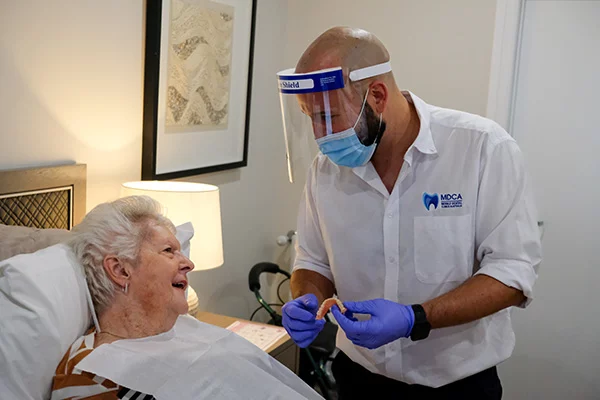
MDCA brings dental care directly to patients who cannot easily access a clinic.
Why It Matters
Motivation to Take Care of Your Teeth and Gums
Gum disease and infection may result in systemic diseases — or make those diseases much more difficult to manage. These systemic diseases affect the entire body rather than a single organ. As a result, doctors often prescribe several different medications to deal with different health issues simultaneously. For example, aside from high blood sugar levels, many diabetic patients also have high cholesterol and elevated blood pressure — requiring at least three different medications.
The consequences can cascade and accumulate — and those consequences might be traced partly to poor oral health. After all, the mouth is the gateway to our digestive and respiratory functions. It is our first line of defence against infections. If the mouth is compromised, our overall health becomes at risk.
What excellent oral health contributes to:
- Better blood sugar control and reduced diabetes complications
- Lower risk of heart disease and stroke
- Reduced risk of respiratory infections entering via the mouth
- Improved confidence — professionally and socially
- Overall fitness and physical wellbeing
Those who are serious about their health and fitness also pay attention to the health of their teeth and gums. It's a full system — if a single component is neglected, the entire system suffers. Think of it like maintaining the correct tyre pressure: it affects not just the tyre, but safety, vehicle handling and fuel efficiency. Our teeth don't just enable us to eat properly. They affect our cardiovascular health, our overall fitness, and even our professional success — because of that extra confidence whenever we smile.
Taking Action
The First Step: See a Dentist
If you want to improve your oral health, the first step is to see a dentist. A dentist will immediately identify problems and design a course of action to solve those problems and stop complications before they worsen.
Recognising Gingivitis Early
A dentist might notice bright red or purple gums that are painful to the touch — common signs of gingivitis. Prompt treatment (which may require at least 2 weeks for signs and symptoms to fully resolve) will prevent the mild gum disease from progressing into severe periodontal disease. In advanced cases, surgical intervention may be required.
It's important to take care of our oral health — not just for our teeth and gums, but for our overall wellbeing. The cost of neglecting dental health is too high when you consider the potential complications and procedures required, plus the inconveniences and financial burden. The good news is that the cost of taking care of your oral health is significantly lower, and proves to be a worthy investment in the long term.
Prevention is always cheaper than treatment.
Regular check-ups, brushing, flossing, and prompt attention to dental issues can prevent the cascade of systemic health complications — saving you money, discomfort, and time.
Your Smile. Our Passion.
Don't wait for problems to worsen. Our mobile dental clinics bring professional care directly to aged care facilities, schools, workplaces and more — across Australia.
CALL 1300 765 640 FOR MORE INFORMATION